
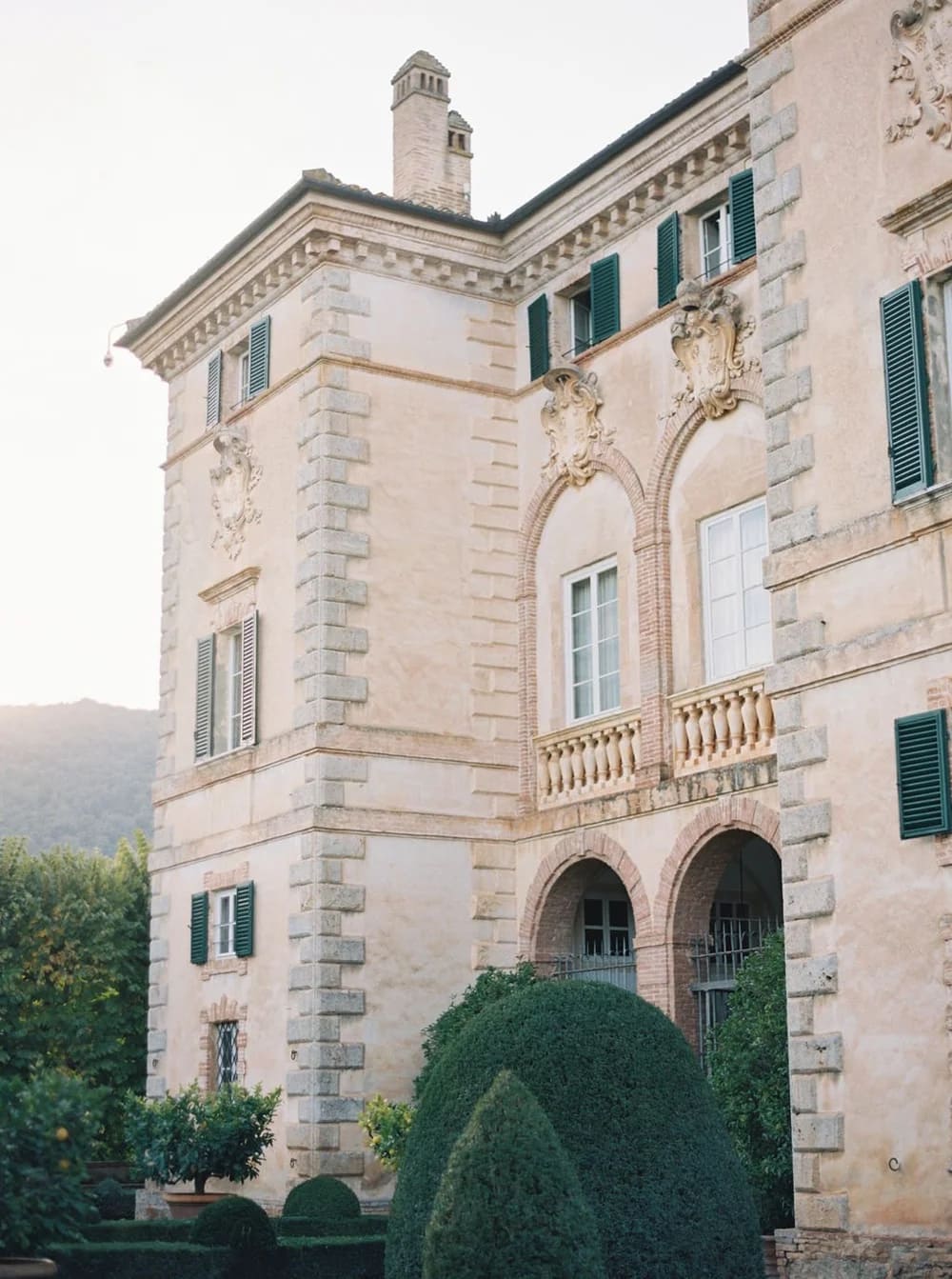
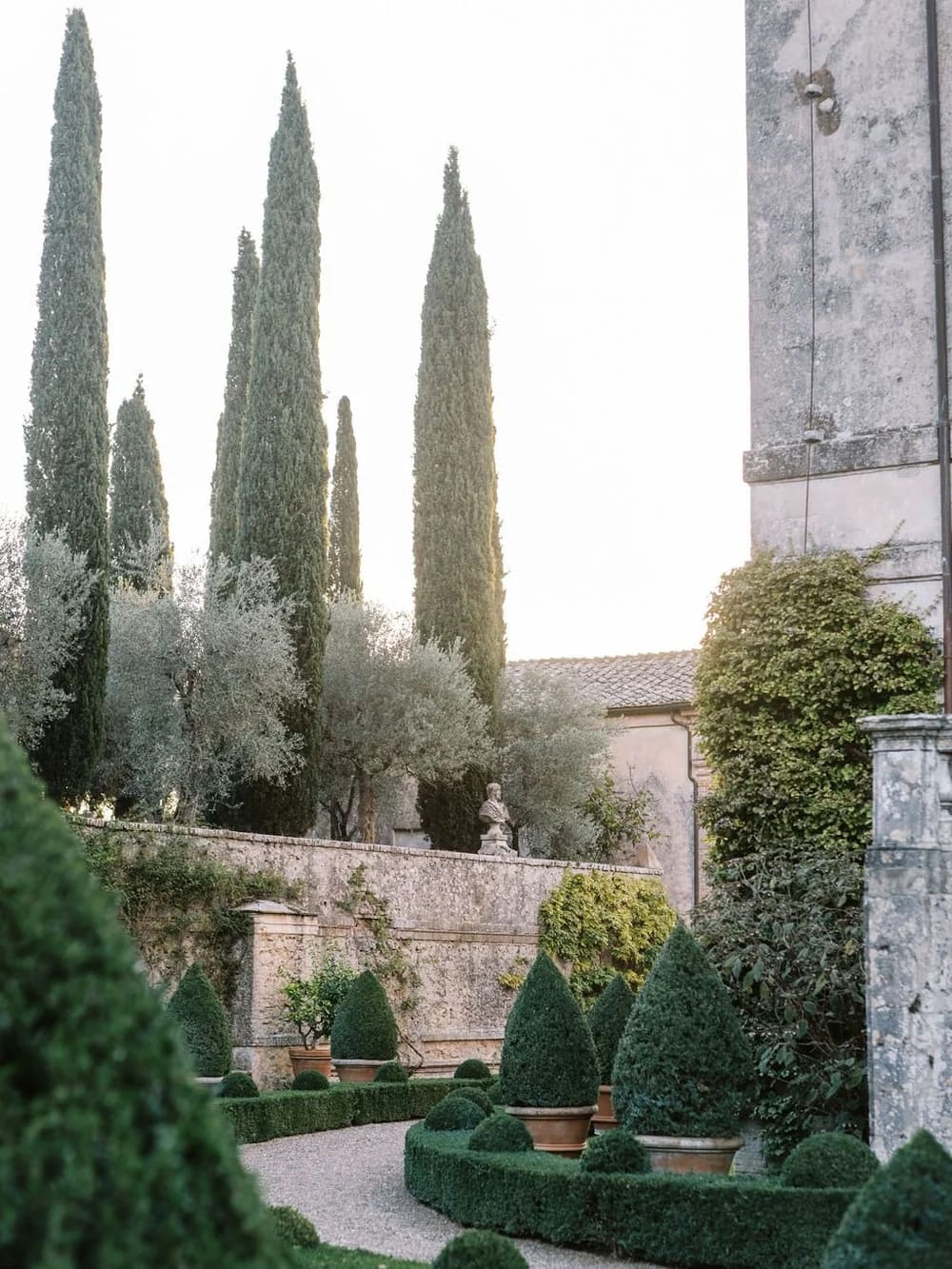
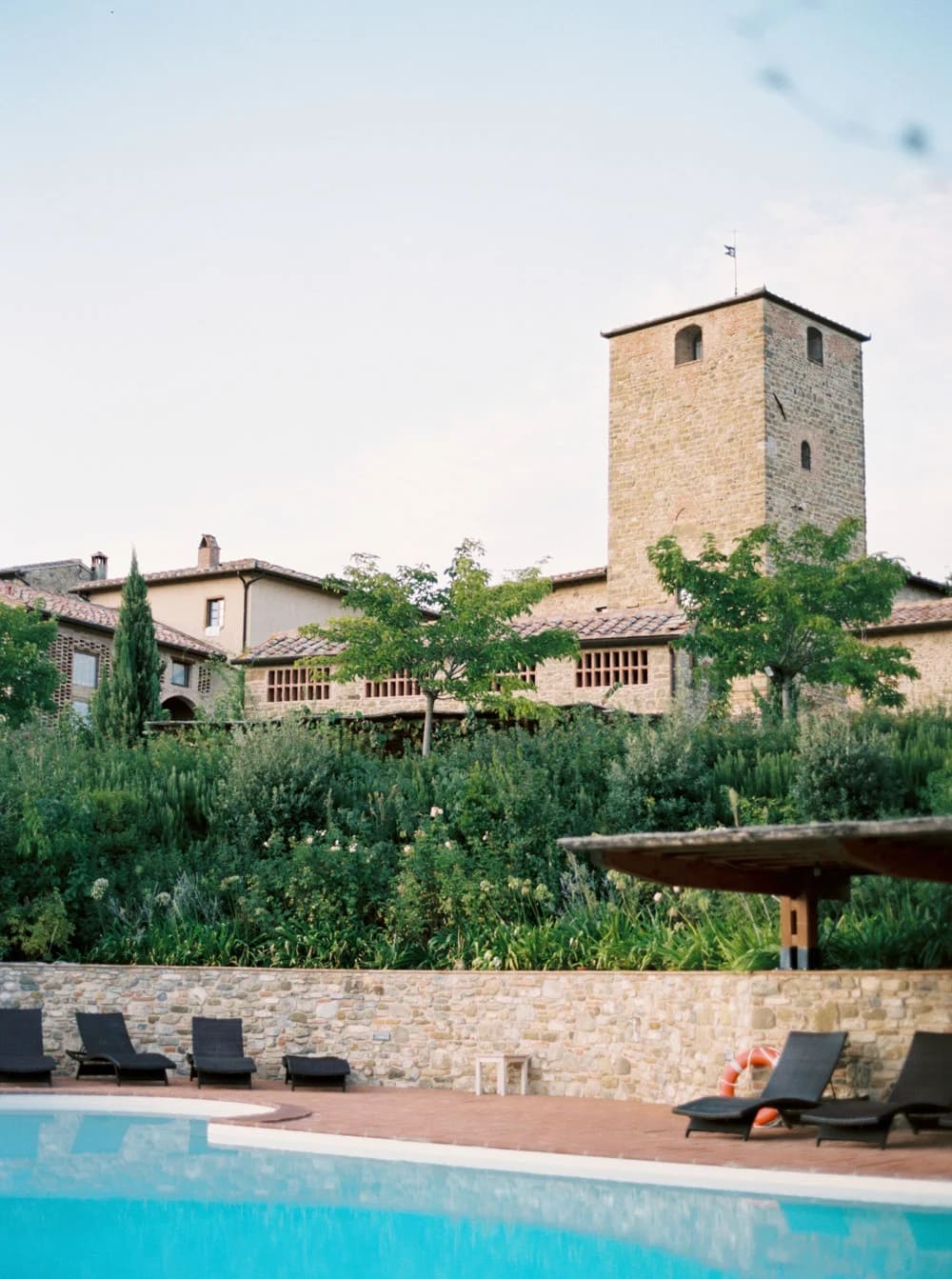
There is a particular quality to the Tuscan light in the late afternoon — golden, low, and unhurried. It falls across cypress avenues and terracotta rooftops the same way it has for five centuries. For couples who have dreamed of a wedding in Italy, Tuscany is often the first image that comes to mind, and rarely the wrong one.
But "Tuscany" is not a single venue — it is a region of extraordinary diversity. A hilltop villa above Siena has a completely different feel from a working wine estate in Chianti. An ancient farmhouse in Val d'Orcia tells a different story than a Renaissance castello near Florence. The choice between a private villa and an agriturismo shapes not just the backdrop for your wedding day, but the entire experience your guests will carry home.
This guide is written for couples who want more than a pretty location. It is for those who want to understand what each type of property actually offers — the atmosphere, the logistics, the trade-offs — so they can make a decision that fits the wedding they are truly imagining.
"The difference between a good wedding and an unforgettable one is rarely the flowers. It is almost always the venue."
The Trade-off Worth Knowing
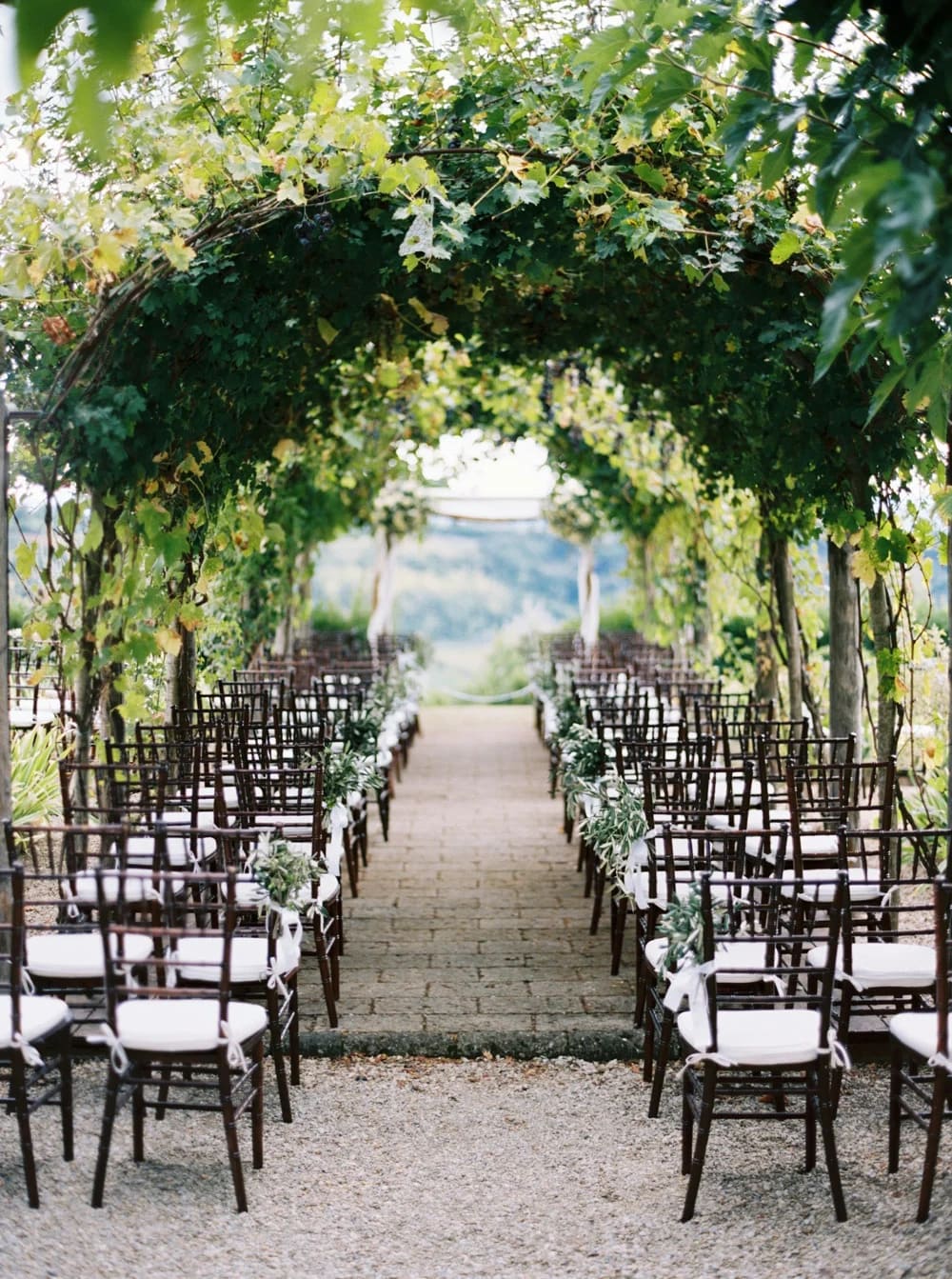
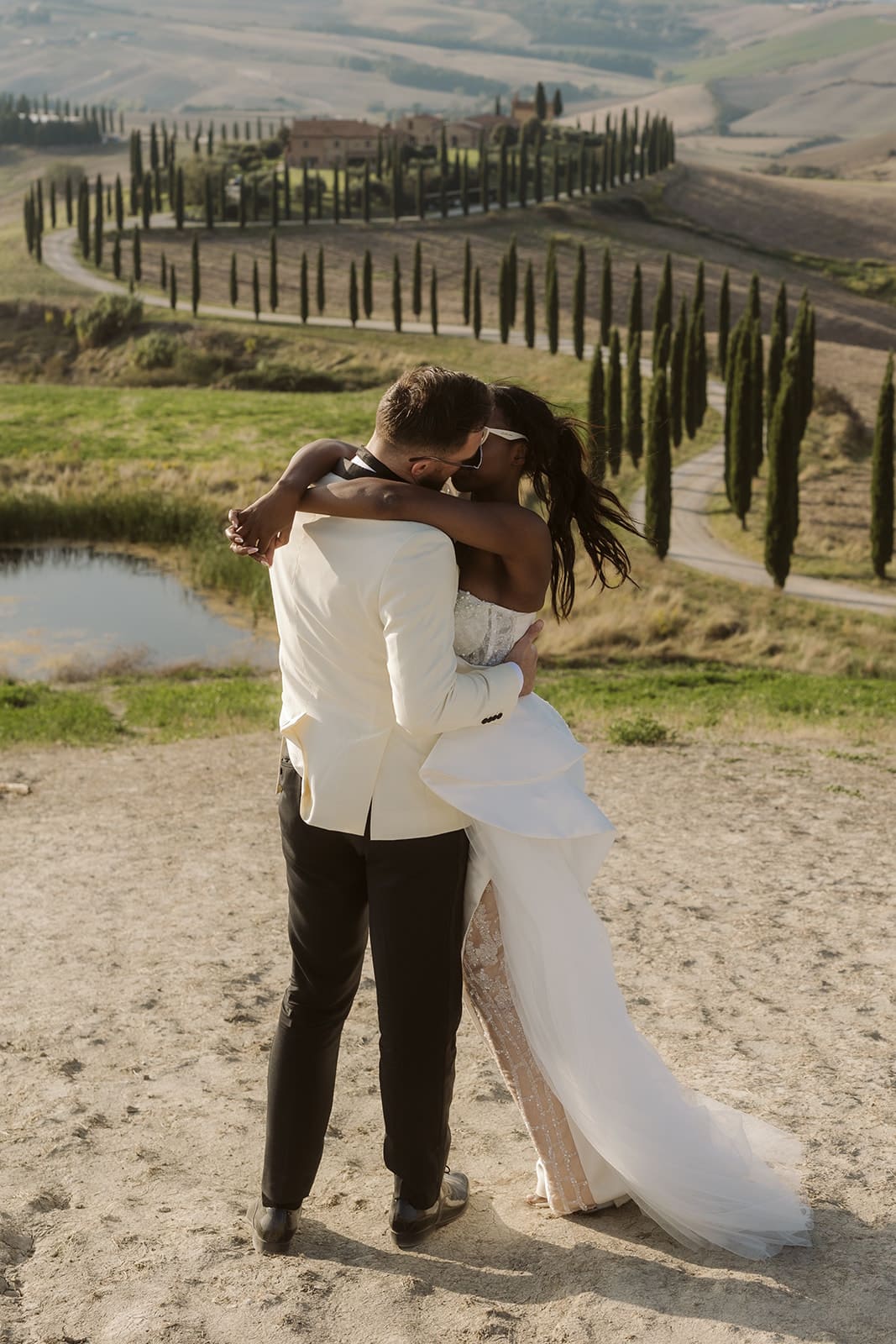
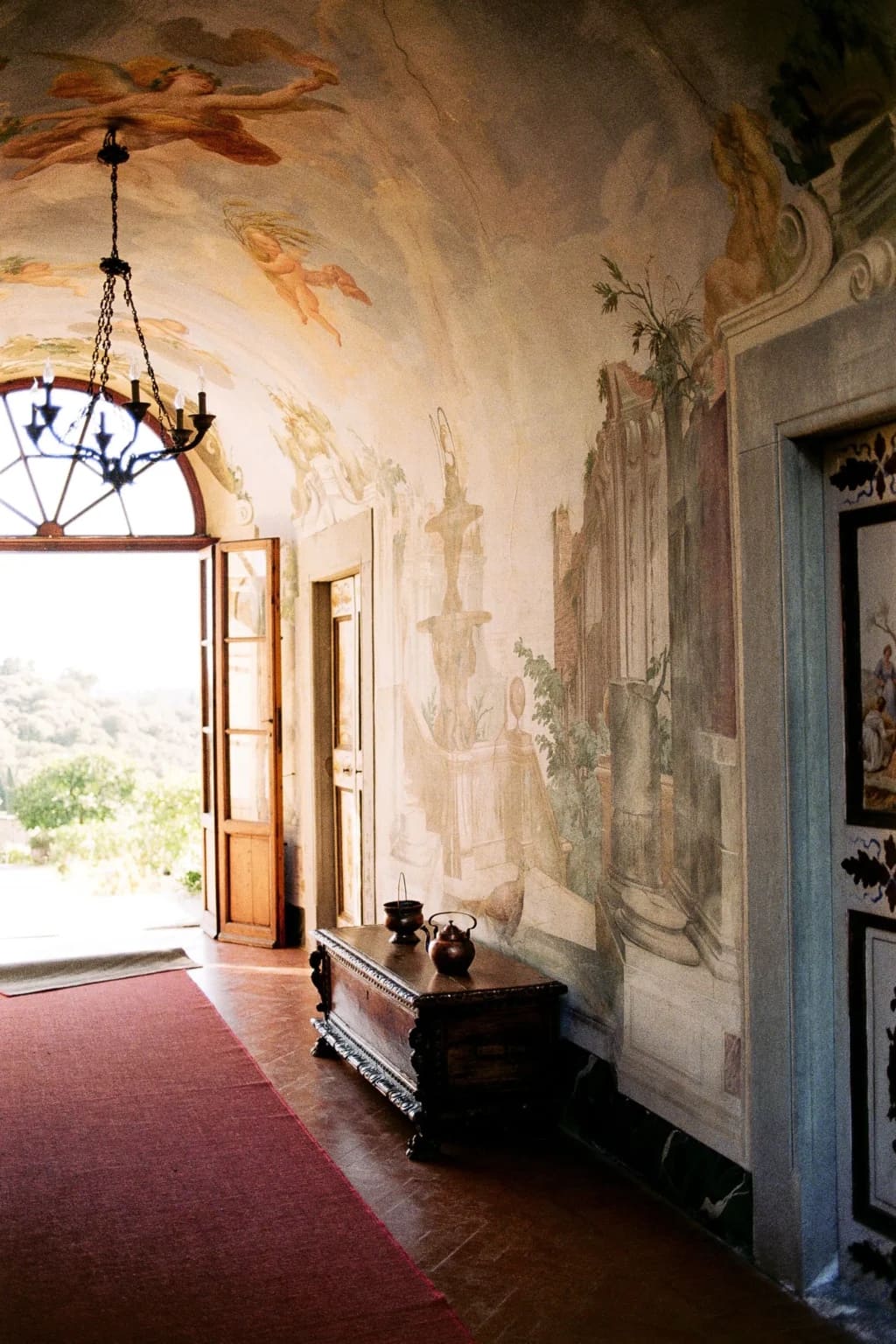
The Agriturismo Aesthetic
Expect exposed stone, terracotta floors, wood-beamed ceilings, and views that have not changed in a century. This is not the austere simplicity of a minimalist venue — it is the warmth of a place that has been lived in and loved. Florals here tend toward the abundant and the wild: ranunculus and garden roses, herbs from the property's own kitchen garden, loose arrangements that look as though they were gathered that morning.
The working nature of an agriturismo also opens up details that a private villa cannot offer: a private wine tasting in the estate's own cellar the evening before the wedding, an olive harvest walk for guests arriving early, a cooking class with the estate chef as part of the wedding weekend itinerary.
Villa or Agriturismo? A Practical Framework
The honest answer is that neither format is objectively better. The right choice depends entirely on the kind of celebration you are building and the kind of experience you want your guests to have.
"The best venue is not one just beautiful, but meaningful, suitable, family vibe."
Where in Tuscany: The Regions That Matter
Tuscany is large — roughly the size of New Hampshire — and its character changes significantly from north to south. The region you choose affects not just the view but the style of the properties available, the accessibility for international guests, and the overall atmosphere of your wedding.
Chianti Classico
The heartland of Tuscany and perhaps its most iconic wedding territory. Rolling hills planted with vines, medieval borghi, stone farmhouses along gravel roads (the famous strade bianche). Chianti suits couples who want the classic Tuscan aesthetic — and who don't mind that their guests will need a car to get anywhere. Florence and Siena are both within 45 minutes; the nearest airports are at Peretola (Florence) and occasionally Ampugnano (Siena, limited flights).
Val d'Orcia
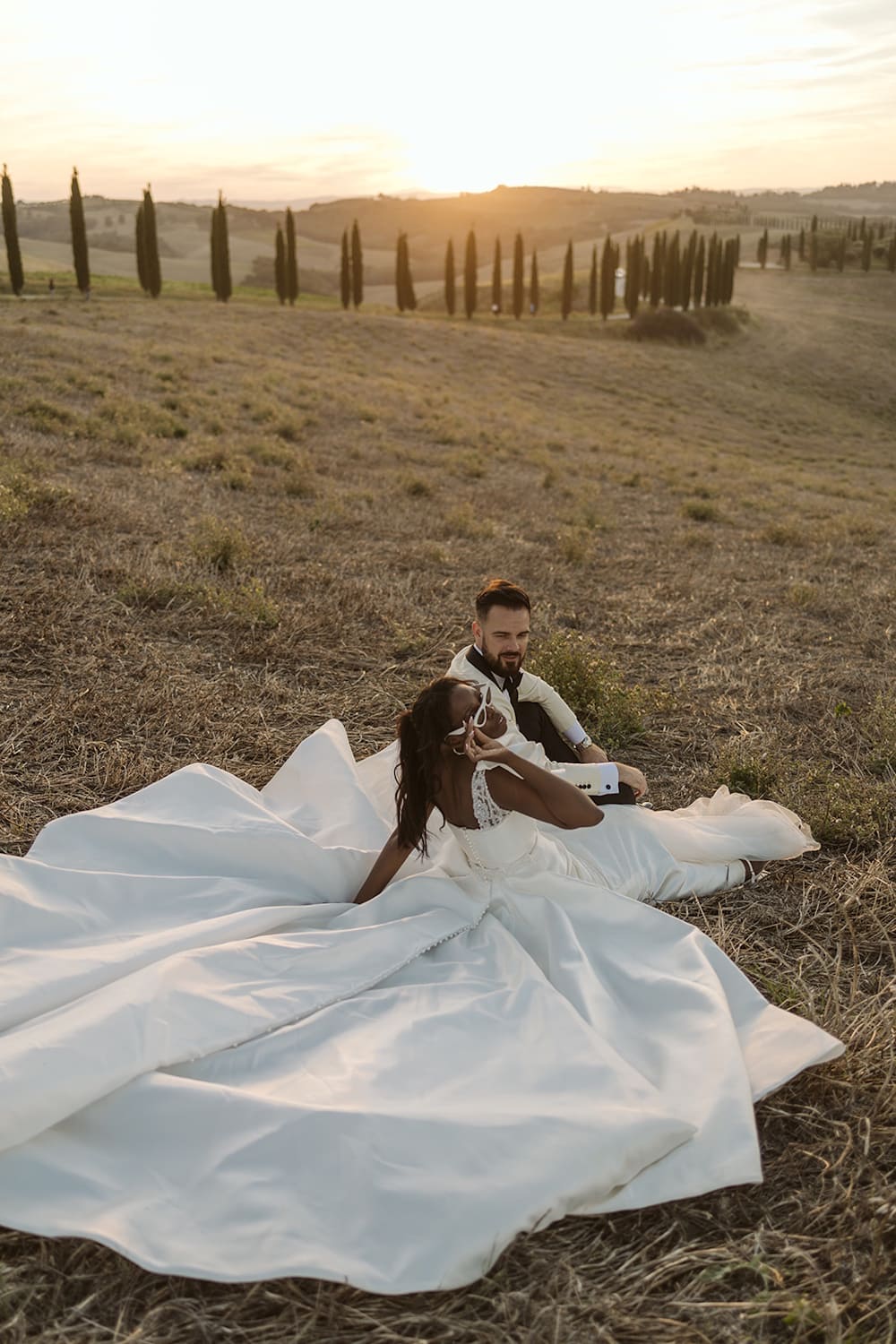
A UNESCO World Heritage landscape and the most cinematic corner of Tuscany. The cypress-lined roads, the isolated farmhouses on hilltops, the golden fields in summer — this is the Tuscany of photography. Val d'Orcia is more remote than Chianti, which makes it ideal for couples who want a true escape. Allow extra transfer time from Florence (approximately 1.5 hours). Pienza, Montalcino, and Montepulciano are nearby for pre- and post-wedding explorations.
Lucca and the Versilia
The northwestern corner of Tuscany offers a different kind of beauty — more verdant, more enclosed, less austere than the southern regions. Lucca itself is one of the best-preserved walled medieval cities in Italy. Properties here tend to be lush rather than dramatic, with dense greenery and a slightly softer light. Proximity to the coast means some venues offer beach access as part of the wedding weekend — unusual for an inland Tuscany setting.
The Siena Hills
For couples who want the landscape of Chianti with better access to a city, the hills around Siena offer an excellent balance. The Palio country has a particular severity and pride that comes through in its architecture — taller towers, darker stone, more formal gardens. Wedding venues here often have strong historical connections: estates that have been in the same family for generations, chapels that have hosted weddings for centuries.
Planning Your Tuscany Wedding with Fior d'Amore
At Fior d'Amore, we have built relationships with the estates, the caterers, the chapel-keepers, and the local authorities that make a Tuscan wedding genuinely work — not just look beautiful in photographs, but feel effortless from the inside.
Our approach is simple: you arrive as an honored guest at your own wedding. Every logistics decision — the vendor calls, the contract negotiations, the timeline coordination, the curfew conversation with the comune — is handled before you land. What remains for you is exactly what should remain: the anticipation, the pleasure, and the celebration.
Whether you are imagining a 20-person elopement in a Val d'Orcia farmhouse or a 150-guest celebration at a Chianti estate, we work at the scale and style of the wedding you are actually planning — not a templated version of it.
Get in touch: +39 380 796 1779 · en.fiordamore.com
Frequently Asked Questions
-
How far in advance should we book a Tuscany venue?
For peak season (June and September), 12–18 months is standard for the most sought-after properties. May, October, and off-peak dates may be available with 6–9 months' notice, but vendor availability tends to fill earlier than venue availability.
-
Can we have a legally binding wedding in Tuscany?
Yes, but it requires advance preparation: apostilled documents from your home country, certified Italian translations, a legal interpreter, and coordination with the local comune. Your planner should begin this process at least 12 months before the wedding date.
-
Is it possible to rent an agriturismo exclusively?
Many agriturismos offer full exclusive-use buyouts, particularly for multi-night wedding weekends. This is often the preferred format for destination wedding couples, as it ensures complete privacy and allows the estate's hospitality to be entirely focused on your group. Terms and minimum night requirements vary by property.
-
What is the average cost of a Tuscany villa wedding?
Venue rental alone ranges from €15,000 for a smaller intimate property to €80,000+ for a landmark estate. Catering typically runs €120–€250 per guest at quality level. Total wedding budgets in Tuscany for 60–80 guests generally range from €50,000 to €150,000 depending on season, vendor tier, and duration. Our Italy wedding budget guide covers this in detail.
-
Do we need a wedding planner for a Tuscany villa wedding?
For a destination villa wedding, a local planner is not a convenience — it is a practical necessity. Villas do not come with event infrastructure or on-site coordination. Managing 8–12 international suppliers across a multi-day event, in a region where the best vendors speak primarily Italian, without a trusted local representative, is not a task that benefits from improvisation.
Tuscany will give you the backdrop. We give you the confidence to actually enjoy it.
© Fior d'Amore · en.fiordamore.com · @italy_wedding_event